

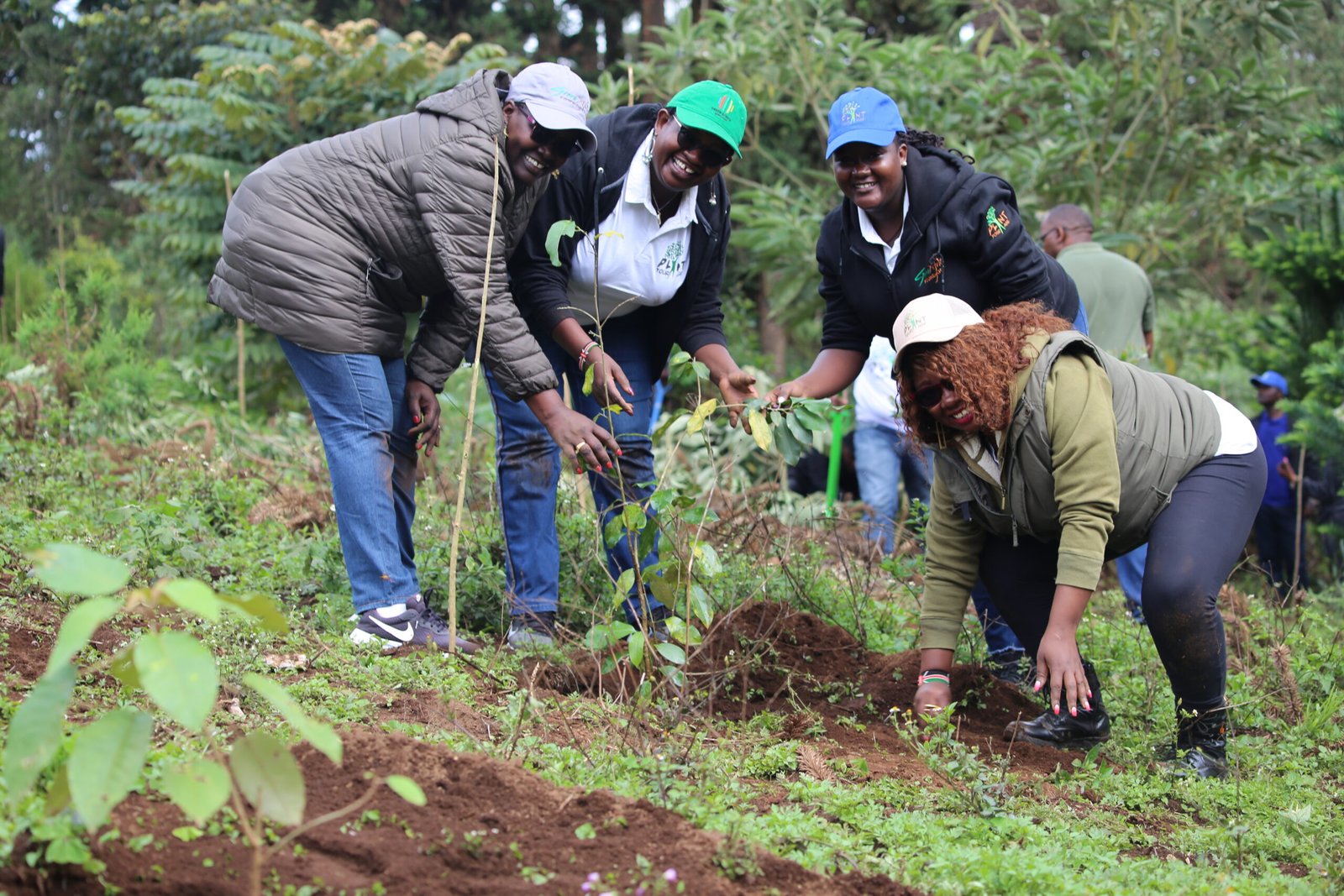
Ask most people what a tree costs and they’ll picture a seedling: a small plant, a small price. That’s the least honest number you could quote, because a seedling that dies in month two cost exactly as much to plant as one that’s thriving at month twelve, and only one of them did anything for the planet.
Here’s the actual cost of growing one tree for its first year, itemised the way we track it internally:
| Cost item | Estimated cost per seedling (KSH) |
|---|---|
| Purchase of seedling | 100 |
| Transportation | 20 |
| Site preparation and planting | 50 |
| Maintenance | 50 |
| Monitoring and record keeping | 30 |
| Initial watering | 50 |
| Protection | 50 |
| Total | 350 |
We’ve written before about the gap between trees reported planted and trees a satellite can actually verify. This is the other half of that honesty: what it costs, in real shillings, to close it one seedling at a time.
Notice what’s not the biggest line item: the seedling itself is under a third of the total cost. The other two-thirds (transport, site prep, maintenance, monitoring, watering, protection) is the part that determines whether that tree is still alive in twelve months. It’s also the part every under-funded planting programme quietly cuts first, because a photo doesn’t need maintenance to look good on the day it’s taken.
This is why Plant Your Age’s own restoration arithmetic matters: Kenya’s national restoration programme is funded at roughly a twentieth of its estimated annual requirement. At that funding level, a programme can afford the seedling and the planting day (the visible third of the cost) and struggle to afford the invisible two-thirds that decide whether the tree survives.
Publishing the full KSH 350 breakdown, not just the headline seedling price, is our way of refusing that shortcut in our own accounting before asking anyone else to fix theirs.
When you sponsor a tree through Plant Your Age, this is the number your contribution funds: not a discounted seedling price, but a full year of the care that gives that seedling a real chance to still be standing at its first birthday, and every one after. Every shilling in that KSH 350 has a job. None of it is padding, and none of it is optional if the goal is a living tree rather than a planting-day photograph.