
Kenya’s short rains, typically arriving through October and November, are the single best planting window of the year for most indigenous species in Nairobi and the highlands, which is exactly why Kenya’s National Tree Growing Day lands in November. But a good planting window only helps a tree that gets planted correctly and cared for afterward. Here’s what that actually looks like.
Before You Plant
Choose indigenous species suited to your specific site: soil type, altitude, and rainfall all matter more than which tree looks best in a nursery photo. Indigenous species generally establish faster and survive better in local conditions than fast-growing exotics, and they do more for local biodiversity once mature. Prepare the planting hole well before your seedling arrives: a hole roughly twice the width of the root ball, with the topsoil and subsoil kept separate so you can return topsoil to the bottom of the hole where new roots will need it most.
On Planting Day
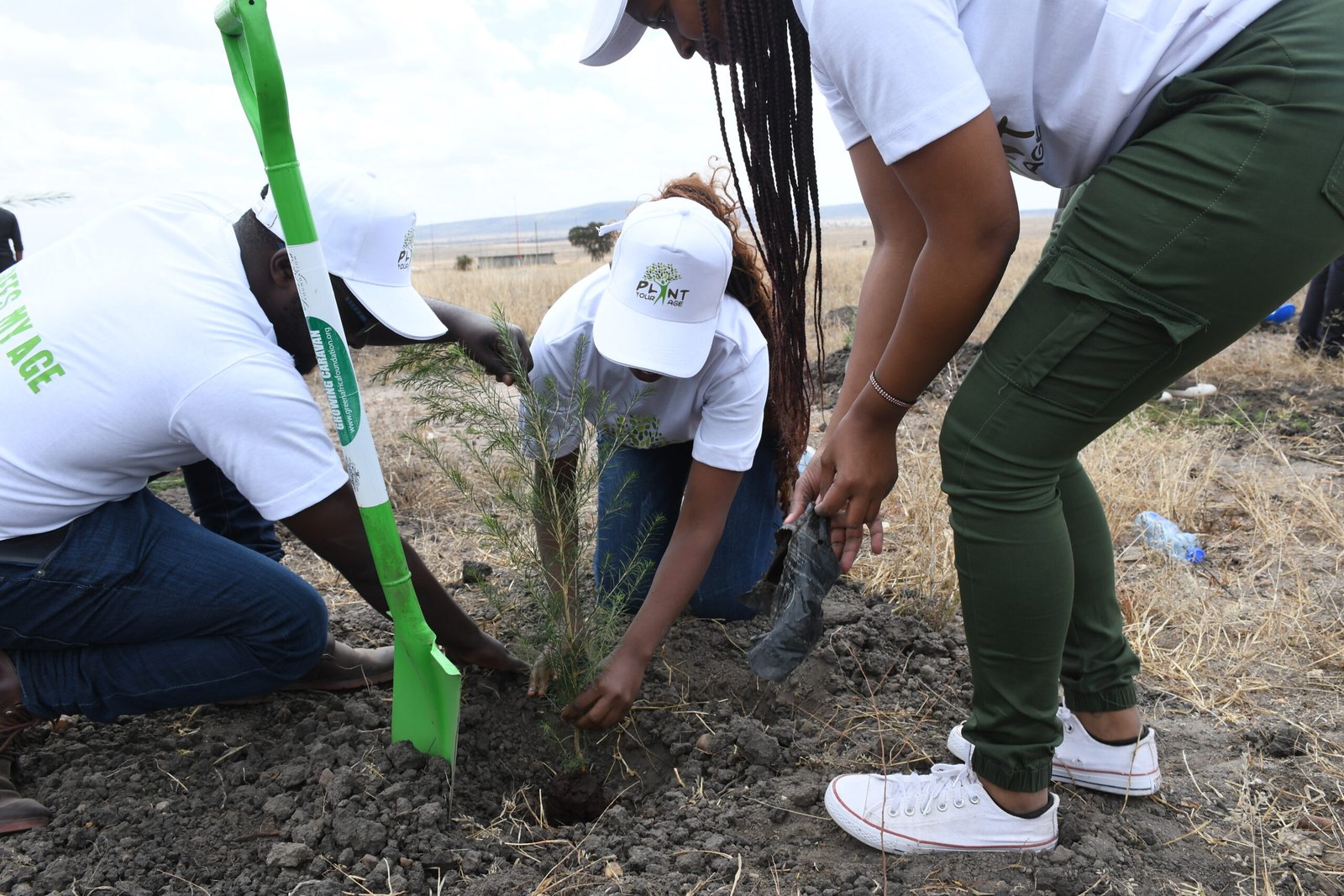
Water the seedling thoroughly before it ever goes into the ground: a dry root ball planted into moist soil still struggles. Set the seedling so the base of the stem sits level with the surrounding ground, not buried deeper for a false sense of stability; a too-deep planting is one of the most common causes of early tree death. Backfill with the reserved topsoil, firm gently to remove air pockets, and water again immediately after planting, thoroughly enough that the water reaches the full depth of the root zone.
Every step here is also, in effect, spending the KSH 350 we’ve costed out for a tree’s first year the way it’s meant to be spent: on the seedling actually making it to its first birthday, not just into the ground.
The Part Almost Everyone Skips
Planting day gets the photo. The next twelve months get the tree. Water consistently through any dry spell in the tree’s first year: this is non-negotiable for survival, especially for anything planted just before the short rains end. Mulch around the base, a few centimetres deep and kept clear of the stem itself, to hold moisture and suppress competing grass. Protect young seedlings from livestock and foot traffic with simple fencing or thorn barriers, and check monthly for pest damage or dieback so problems get caught while they’re still fixable.
Why This Matters More Than Which Day You Plant On
None of this is complicated, and none of it costs much beyond consistency. But it’s exactly the difference between a seedling that gets photographed once and a tree that gets verified alive twelve months later: the only measure that actually counts under Plant Your Age’s own standard. Bring a jembe and a jerrycan to your next planting event, not just enthusiasm for the day itself; the water you carry in November is what decides whether this tree is still here to report on next September.